My Store
2-Week old House Fly Pupae (Musca domestica)
2-Week old House Fly Pupae (Musca domestica)
Couldn't load pickup availability
Important Order Information
Live and perishable products are non-returnable. Eligible Live Arrival claims must be reported to SpoodFood within 2 hours of the carrier-recorded delivery time.
Fruit fly cultures may contain eggs, larvae, pupae, and developing flies even when few or no adult flies are visible at delivery.
Dry goods may be eligible for return subject to our Return & Refund Policy. Please contact SpoodFood before returning any item.
Musca domestica – House Fly Pupae
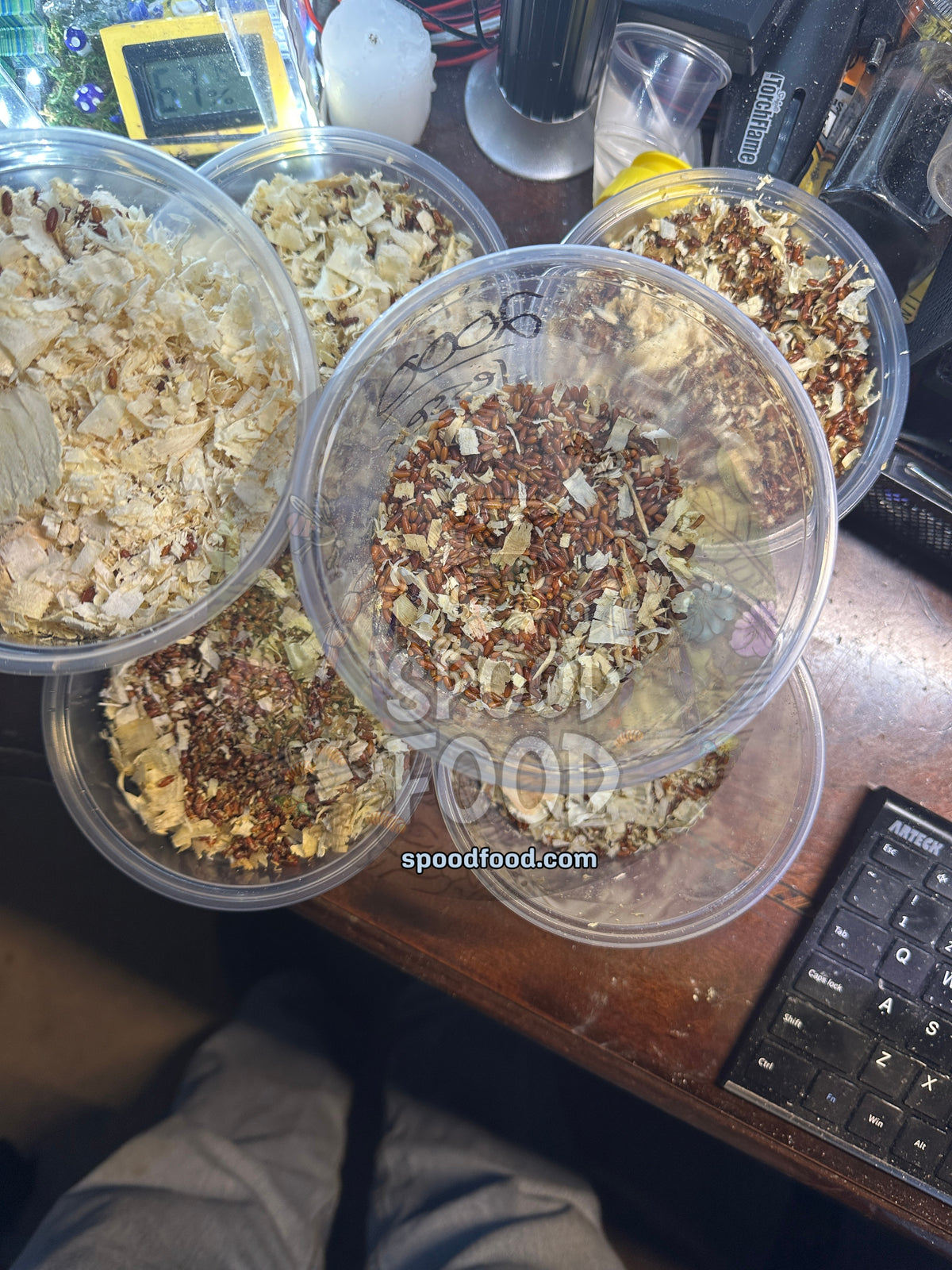
House fly pupae are a high-value feeder insect for insectivores that benefit from variety in their diet. Pupae are easy to handle, do not escape, and emerge into adult flies that provide active prey stimulation. They are commonly used for dart frogs, chameleons, mantises, and other insectivores that respond well to flying prey.
Important — These Pupae Are Approximately 2 Weeks Old
These house fly pupae are approximately 2 weeks old and are being offered at a reduced price due to their age.
Pupal age affects successful adult emergence. As shown in the house fly emergence chart posted in our blog, emergence rates decrease as pupae age. Because this batch is approximately two weeks old, customers should expect a lower emergence rate than they would receive from fresh pupae.
Please review the chart and storage information in our blog before purchasing so you understand the expected performance of older pupae.
This product is sold only in quantities of 250 pupae.
Key Characteristics
- Species: Musca domestica
- Quantity: 250 pupae per order
- Form: Approximately 2-week-old pupae
- Age: Older stock — reduced emergence should be expected
- Size: Adult house flies are larger than fruit flies and suitable for medium insectivores
- Nutritional profile: High protein and useful for dietary variety
- Price: Discounted to reflect the age of this batch
- Availability: Sold only in quantities of 250
Usage Notes
- Allow pupae to warm to room temperature for adult emergence
- Do not expect the same emergence rate as fresh pupae
- Emergence rate and timing are affected by pupal age and ambient temperature
- Warmer conditions generally accelerate development
- Use a fly trap or enclosed feeding container to manage adult flies during feeding
Storage
For continued development, keep the pupae at room temperature. Refrigeration at approximately 50°F–55°F can slow development for short-term storage. Do not freeze.
Because these pupae are already approximately two weeks old, additional storage time may further reduce successful adult emergence.
Please purchase this batch with the understanding that it is older stock, is sold in quantities of 250, and reduced emergence is expected.
Share