My Store
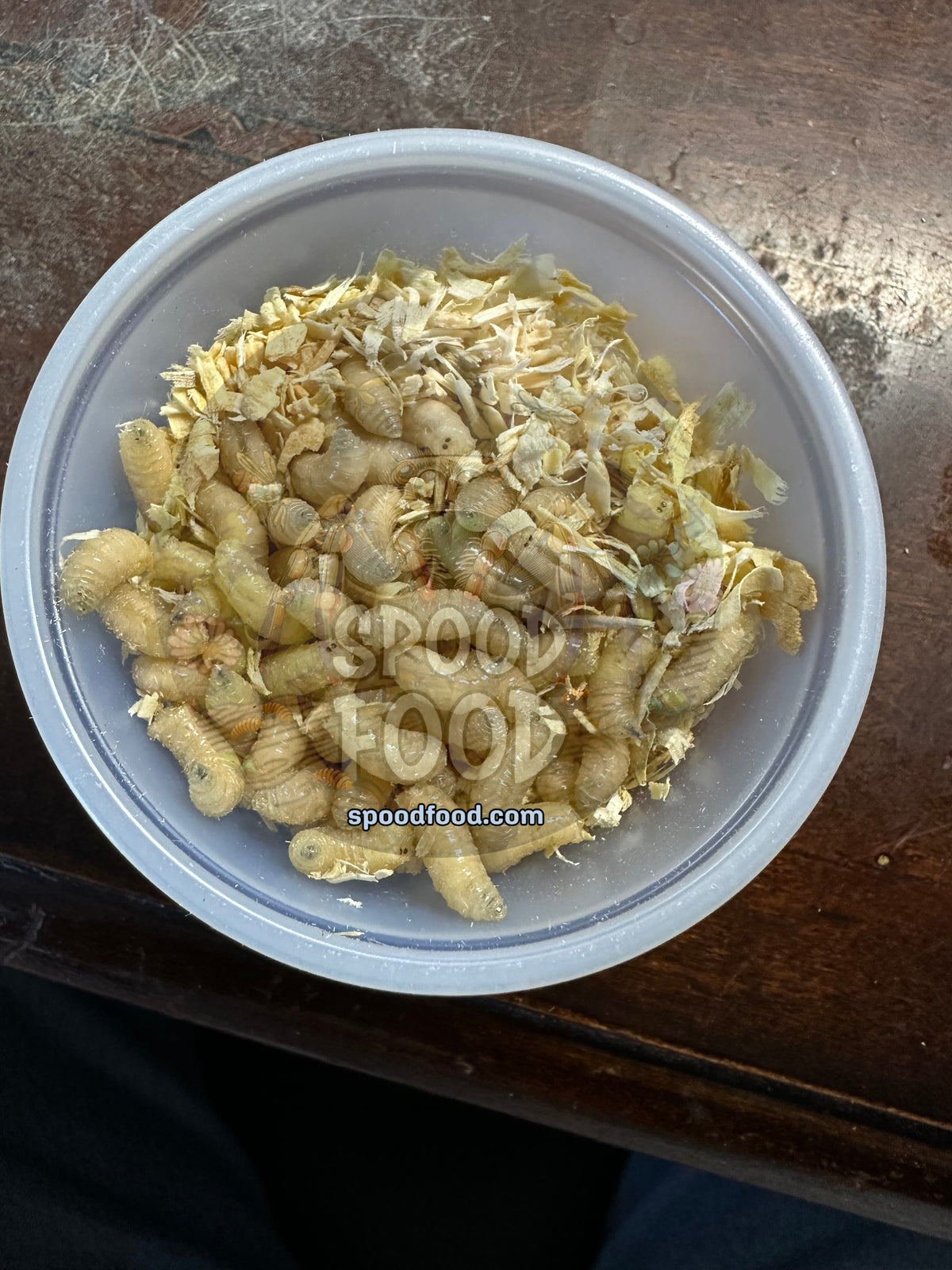
Blue Bottle Fly Spikes – Calliphora sp. | Live Feeder Fly Spikes
Blue Bottle Fly Spikes – Calliphora sp. | Live Feeder Fly Spikes
Couldn't load pickup availability
Important Order Information
Live and perishable products are non-returnable. Eligible Live Arrival claims must be reported to SpoodFood within 2 hours of the carrier-recorded delivery time.
Fruit fly cultures may contain eggs, larvae, pupae, and developing flies even when few or no adult flies are visible at delivery.
Dry goods may be eligible for return subject to our Return & Refund Policy. Please contact SpoodFood before returning any item.
Calliphora sp. – Blue Bottle Fly Spikes
Blue bottle fly spikes are the larval stage of Calliphora species, commonly raised as feeder insects for chameleons, mantises, larger jumping spiders, frogs, reptiles, and other insectivores that benefit from active flying prey.
The spikes can be fed directly as larvae or allowed to pupate and emerge as adult blue bottle flies. Development time varies substantially with temperature, age of the larvae, and storage conditions.
Key Characteristics
- Species: Calliphora sp. (Blue Bottle Fly)
- Form: Live larvae (“spikes”)
- Development: Larvae → pupae → adult flies
- Adult size: Larger and more robust than typical house flies
- Feeding use: Can be offered as larvae or hatched into active flying prey
- Enrichment: Adult flies encourage natural hunting and pursuit behavior
Storage & Hatching
- Refrigeration can be used to slow larval development and extend the useful life of the spikes.
- Keep them cool, but do not freeze them.
- To produce adult flies, remove the quantity you want to hatch from refrigeration and keep them at room temperature.
- The larvae will darken and form pupae before adult flies emerge.
- Warmer temperatures generally speed development; cooler temperatures slow it.
- Because the developmental stage of shipped spikes can vary, emergence should not be promised within a specific number of days.
Usage Notes
- Only remove as many spikes as you expect to use or hatch at one time.
- Adult blue bottle flies are strong, active fliers, so hatch and feed them in a controlled container or enclosure.
- Chilling adult flies briefly can slow them temporarily and make transferring them into an enclosure easier.
- Avoid leaving larvae or pupae in excessive heat or direct sunlight.
Share